Ensure your private label cap quality. Avoid costly mistakes! Talk to our team today! Quality Control for Private Label Caps: What to Insp...
Ensure your private label cap quality. Avoid costly mistakes! Talk to our team today!
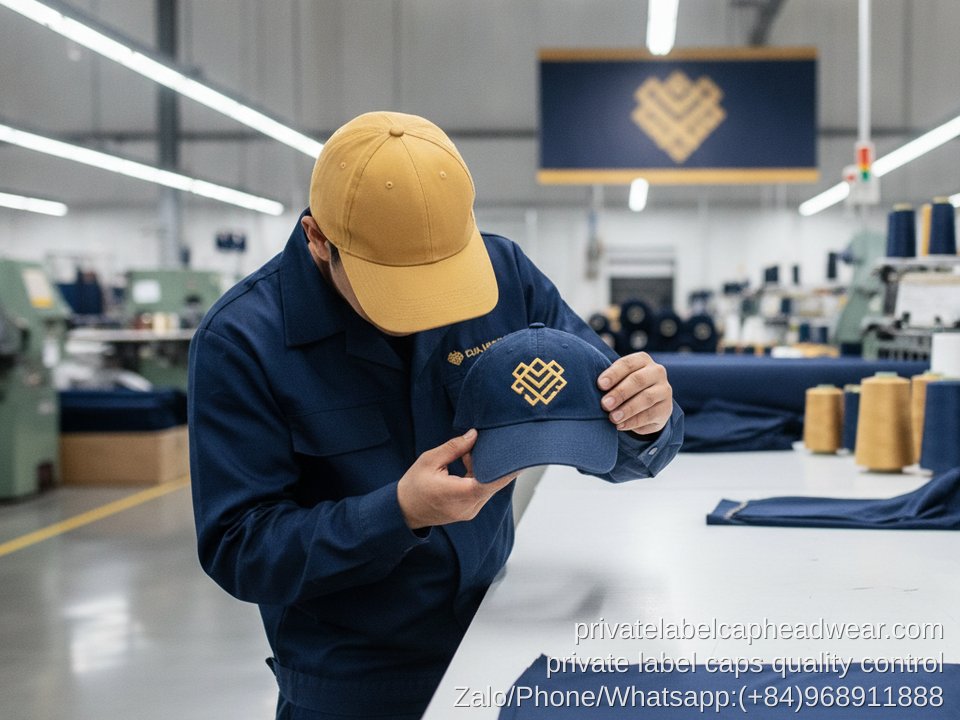
Quality Control for Private Label Caps: What to Inspect Before Accepting Delivery
For brands investing in their own line of headwear, ensuring consistent quality is paramount. When sourcing private label caps from a manufacturer, the final inspection before accepting delivery is a critical step. This process safeguards your brand's reputation and ensures customer satisfaction. Understanding what to inspect during private label caps quality control will empower you to identify potential issues and uphold your brand's standards.
At Private Label Cap Headwear, operated by Gold Garment in Ho Chi Minh City, Vietnam, we understand the meticulous attention to detail required in headwear production. Our commitment to excellence extends to transparent quality assurance processes. This guide will walk you through the essential checks to perform, ensuring your custom caps meet your exact specifications.
Effective private label caps quality control begins with a clear understanding of the agreed-upon specifications. This includes everything from fabric type and color to stitching details, embroidery, and overall construction. Without a defined benchmark, it's difficult to assess whether the delivered product aligns with your expectations. For a deeper dive into the manufacturing process, explore How Custom private label caps Are Made: Step-by-Step Manufacturing Process.
The Importance of a Pre-Shipment Inspection
A pre-shipment inspection is your last opportunity to catch defects before the goods leave the factory. While reputable manufacturers like Gold Garment have robust internal quality checks, an independent inspection or a thorough review of the manufacturer's inspection report provides an unbiased assessment. This is especially crucial when dealing with international suppliers, where logistical challenges can sometimes arise. For insights into broader manufacturing quality, consider the principles of garment quality control Vietnam.
The goal is to minimize the private label caps defect rate to an acceptable level. This involves systematically examining a sample of the finished product against a predefined set of criteria. Establishing a clear understanding of what constitutes a defect, and the acceptable threshold, is key to a successful inspection. This aligns with the broader principles of quality management in apparel production.
Key Areas to Inspect for Private Label Caps Quality Control
1. Overall Appearance and Construction
Begin with a general visual inspection of the caps. Look for any signs of damage, such as tears, snags, or loose threads. The overall shape and structure of the cap should be consistent with the approved sample. Examine the crown for any puckering or unevenness, and check that the brim is straight and well-formed.
The stitching should be neat, uniform, and secure. Loose threads or skipped stitches can indicate poor workmanship and compromise the cap's durability. Pay attention to the seams; they should lie flat and be free from excessive bulk. The internal structure, including the lining and any internal taping, should also be inspected for neatness and proper application.
2. Fabric and Color Consistency
Verify that the fabric used matches the specifications. Feel the texture and weight to ensure it aligns with your expectations. Check for any inconsistencies in the fabric weave or any visible flaws like slubs or streaks. The fabric's color should be consistent across all caps in the batch and precisely match the approved color swatch. Slight variations can occur due to different dye lots, but significant deviations should be flagged.
Understanding the nuances of different materials is vital. Our private label caps Fabric Guide offers detailed information on selecting the best materials for your brand's needs.
3. Embroidery, Printing, and Logos
If your caps feature embroidery or printed logos, these elements require close scrutiny. For embroidery, check for clean stitch definition, correct thread colors, and accurate placement. Ensure there are no loose threads or 'pulls' that detract from the design. The density of the embroidery should be consistent and provide a good visual impact.
For printed logos, examine the clarity and sharpness of the print. Colors should be vibrant and accurate according to your design specifications. Check for any smudging, bleeding, or uneven application of ink. The print should be durable and resistant to cracking or peeling. Inspect the placement of all graphics to ensure they are centered and aligned correctly.
4. Fit and Sizing
While less critical for adjustable caps like snapbacks, for fitted caps, ensuring consistent sizing is important. If you have specific size requirements, verify that the caps measure up. Even for adjustable caps, check that the closures (like snapbacks or buckles) function correctly and feel secure. The overall fit should be comfortable and proportionate.
The variety of cap styles available can impact fit and construction. Our guide on Cap Types Explained: Baseball, Snapback, Trucker, Bucket & More can help you understand these differences.
5. Closures and Adjustments
Inspect all closures, whether they are snapbacks, buckles, Velcro straps, or fitted bands. They should be securely attached and function smoothly without being too loose or too tight. For snapbacks, ensure all snaps are present and correctly aligned. For buckle closures, check that the buckle mechanism is robust and easy to adjust.
The durability of these components is crucial for the longevity of the cap and customer satisfaction. A poorly functioning closure can render a cap unusable.
6. Labels and Tags
Verify that all internal and external labels are correctly placed, sewn securely, and contain the accurate information as per your requirements. This includes branding, care instructions, and country of origin labels. Ensure there are no misspellings or printing errors on these labels.
The correct labeling is not only a matter of branding but also regulatory compliance. Incorrect labeling can lead to significant issues with customs and market entry.
Understanding AQL and Defect Rates
When conducting private label caps quality control, it's common practice to use the **Acceptable Quality Limit (AQL)** system. AQL is a standard used in manufacturing to indicate the maximum number of defects that are considered acceptable in a production lot. This system helps to standardize the inspection process and provides a quantitative measure for accepting or rejecting a batch.
The AQL is typically set at a specific percentage for minor, major, and critical defects. For example, a buyer might specify an AQL of 2.5 for minor defects and 1.0 for major defects. The inspection then involves randomly sampling a predetermined number of units from the production batch and inspecting them according to the AQL standard. If the number of defects found exceeds the AQL limit, the batch is usually rejected or sent back for rework.
Setting a realistic private label caps defect rate is part of establishing strong headwear quality standards. It's important to have a clear understanding of what constitutes a minor versus a major defect. Minor defects might be cosmetic issues that don't affect usability, while major defects could impact the product's functionality or appearance significantly. Establishing these definitions beforehand prevents disputes.
Working with Your Manufacturer for Quality Assurance
Effective private label caps quality control is a collaborative effort. At Private Label Cap Headwear, we encourage open communication with our clients regarding their quality expectations. We provide detailed inspection reports and are amenable to third-party inspections if required.
When specifying your requirements, be as detailed as possible. Referencing your approved samples and providing clear visual aids will help the factory meet your exact needs. Understanding the manufacturing process, as detailed in our guide on How Custom private label caps Are Made: Step-by-Step Manufacturing Process, can also foster better communication.
For brands seeking a reliable partner, a manufacturer with a proven track record is essential. For instance, a real example from Vietnam hat manufacturer Gold Garment showcases our dedication to delivering high-quality headwear consistently. We pride ourselves on our adherence to international headwear quality standards and our ability to manage complex orders, even for smaller MOQs starting at 100 pcs.
Frequently Asked Questions
Q: What is the most common defect found in private label caps?
A: Common defects can range from stitching errors, inconsistent color matching, and logo application issues (embroidery or print) to minor fabric flaws or problems with closures and adjusters. Ensuring clear specifications and a thorough inspection process helps mitigate these risks.
Q: Can I request a sample before mass production?
A: Absolutely. Requesting pre-production samples is a standard and highly recommended practice. This allows you to verify the design, materials, colors, and overall construction before the main production run begins, minimizing the risk of issues with the final order.
Q: What if I find defects after accepting delivery?
A: While the goal is to catch all issues before acceptance, if defects are discovered post-delivery, it's crucial to contact your manufacturer immediately. Provide clear documentation, including photographs and detailed descriptions of the issues. Reputable manufacturers like Gold Garment will work with you to find a fair resolution, which may include repairs, replacements, or a credit for future orders.
Q: How does the MOQ affect quality control?
A: A lower MOQ, such as the 100 pcs offered by Private Label Cap Headwear, does not compromise quality control. Our rigorous inspection processes are applied to all order sizes. In fact, a smaller MOQ can sometimes allow for more focused attention on quality for each individual piece. Learn more about Minimum Order Quantity for private label caps: What Every Brand Should Know.
By meticulously inspecting your private label caps, you ensure that every piece reflects the quality and professionalism your brand represents. Partner with a manufacturer committed to excellence, and your headwear line will undoubtedly stand out.
When exploring your apparel needs, consider that brands also partner with a Vietnam hoodie manufacturer for complementary products, ensuring consistent quality across their entire range.
📩 Request a Free Quote — Response Within 5 Minutes
🌎 Website: privatelabelcapheadwear.com
Factory-direct pricing · MOQ from 100 pcs/style · Sample development · Worldwide shipping


