Unlock private label cap pricing secrets & boost your brand's profit! Get an instant quote now! Private Label Caps Pricing Guide: ...
Unlock private label cap pricing secrets & boost your brand's profit! Get an instant quote now!
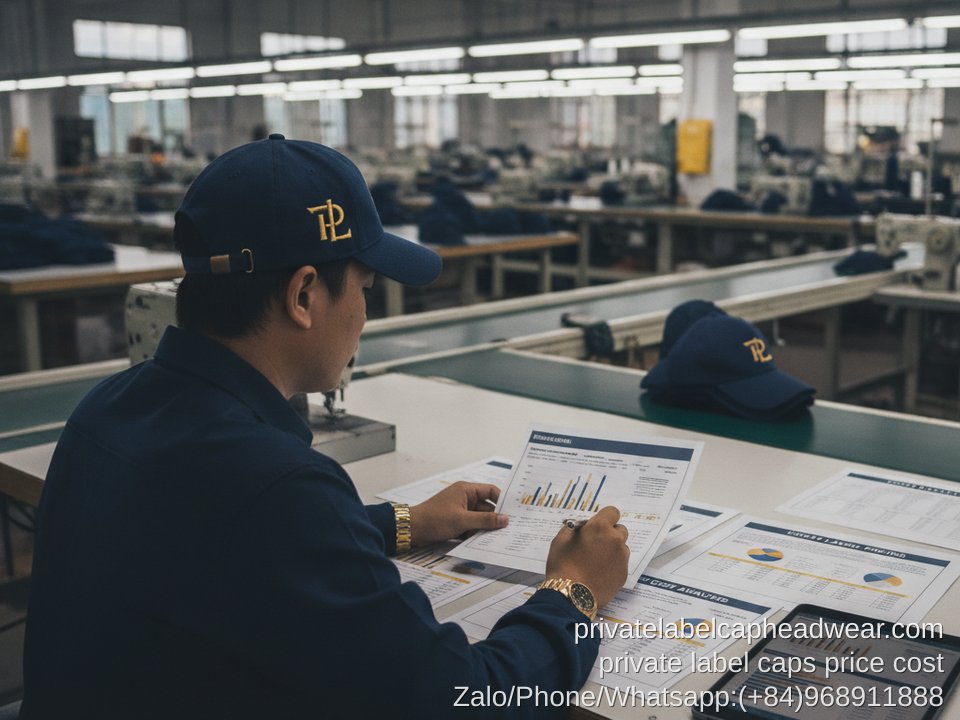
Private Label Caps Pricing Guide: What Affects the Cost Per Unit?
When sourcing custom headwear for your brand, understanding the factors that influence the private label caps price cost is crucial for effective budgeting and strategic planning. As a professional caps manufacturer in Vietnam, operated by Gold Garment, we understand the complexities involved in determining the final unit price. This guide will break down the key elements that contribute to the overall cost, helping you make informed decisions for your next order of custom private label caps price.
Navigating the world of private label manufacturing can seem daunting, especially when it comes to pricing. However, by grasping the core components that drive costs, you can confidently engage with manufacturers and secure the best value for your investment. This transparency is fundamental to building a successful and profitable private label program, ensuring your brand's vision is realized without unexpected financial surprises. We aim to demystify the process, offering clarity on how each decision impacts your headwear unit cost.
Our expertise at Private Label Cap Headwear, a division of Gold Garment based in Ho Chi Minh City, Vietnam, allows us to offer competitive factory-direct pricing. We pride ourselves on providing high-quality headwear with a manageable Minimum Order Quantity (MOQ) of just 100 pieces per style. This flexibility benefits brands of all sizes, from startups to established enterprises looking to expand their product lines. For a deeper understanding of MOQs, you can refer to our comprehensive guide at Gold Garment factory-direct pricing, which details why this metric is so important in garment production.
Key Factors Influencing Private Label Caps Price Cost
The private label caps price cost is not a static figure; it's a dynamic calculation influenced by a multitude of variables. Understanding these elements is the first step in accurately budgeting for your custom headwear. We'll explore each of these critical components in detail.
1. Material Selection
The choice of fabric is perhaps the most significant determinant of your cap's unit price. Different materials offer varying levels of durability, feel, and aesthetic appeal, each with a distinct cost. Common options include cotton twill, polyester, canvas, performance fabrics, and premium materials like wool or leather. Each material has its own sourcing and manufacturing requirements, directly impacting the overall cost.
For instance, standard cotton twill is generally more budget-friendly than specialized performance fabrics designed for moisture-wicking or UV protection. The weight and weave of the fabric also play a role; heavier, denser fabrics typically cost more. Exploring the nuances of each material is essential for aligning your product's quality with your brand's positioning and budget. You can learn more about choosing the right material in our private label caps Fabric Guide: Choosing the Right Material for Your Order.
2. Design Complexity and Customization
The intricacy of your cap's design directly affects the manufacturing process and, consequently, the headwear unit cost. Simple, single-color designs with minimal embellishments will be less expensive than those featuring multiple colors, complex patterns, or intricate branding elements.
This includes the type and number of decorations applied. Options like embroidery, screen printing, heat transfers, and woven patches each have different cost structures. For example, a multi-color embroidered logo with high stitch count will naturally be more expensive than a single-color screen print. The placement of these decorations also contributes; logos on the front, side, and back will increase the labor and material costs involved.
3. Construction and Features
The overall construction of the cap and any additional features you opt for will also impact the private label caps price cost. This encompasses aspects like the number of panels (e.g., 5-panel vs. 6-panel), the type of brim (flat, curved), and the closure mechanism (snapback, strapback, fitted). Each of these choices involves different manufacturing techniques and material usage.
Specialized features such as eyelets (standard vs. metal), custom inner linings, contrasting undervisor colors, or unique brim details can add to the complexity and cost. The type of stitching used, the quality of the sweatband, and the overall finish also contribute to the final price. Understanding how these construction details translate into manufacturing effort helps in appreciating the final unit price.
4. Decoration Techniques
As mentioned briefly, the method used to apply your brand's logo or design is a significant cost driver. Each decoration technique has its own set of setup costs, material expenses, and labor requirements.
- Embroidery: Offers a premium, textured look but can be costly for complex, multi-color designs with high stitch counts.
- Screen Printing: Cost-effective for larger runs and solid colors, but setup costs can be higher for multiple colors.
- Heat Transfer: Versatile for intricate designs and gradients, with costs varying based on the complexity and type of transfer material.
- Woven Patches: Provide a high-quality, durable finish, with costs influenced by size, detail, and thread count.
The choice of technique should align with your brand's aesthetic, the complexity of your artwork, and your budget. Our team can guide you through the best options for achieving your desired look and feel within your price point.
5. Order Volume (Quantity)
While our MOQ of 100 pcs offers excellent accessibility, the total quantity of your order significantly impacts the private label caps price cost per unit. Manufacturers benefit from economies of scale; the more units produced in a single run, the lower the cost per unit becomes.
This is because fixed costs, such as setup for machinery and design preparation, are spread across a larger number of items. Larger orders allow for more efficient use of materials and labor. This is why bulk orders typically result in substantial discounts. For brands looking to maximize their budget, consolidating orders or planning for future growth to increase order volume can lead to significant savings.
6. Sourcing Location and Manufacturing Standards
The geographical location of the manufacturing facility plays a role in pricing due to varying labor costs, material availability, and logistical expenses. As a manufacturer based in Vietnam, Gold Garment leverages competitive advantages in labor and production efficiency, allowing us to offer attractive factory-direct pricing. This means you're cutting out intermediaries and dealing directly with the source.
Furthermore, adhering to international quality and ethical manufacturing standards, as we do at our facility at 32 Pho Quang, Ho Chi Minh City, Vietnam, can influence costs. Investing in quality control, skilled labor, and sustainable practices ensures a superior product, which is reflected in the pricing but ultimately provides greater value and brand integrity. A real example of our capabilities as a Gold Garment cap hat manufacturer Vietnam can be seen in our case studies, like the one detailing cap hat winter beanies manufacturer.
7. Shipping and Logistics
The final destination of your order and the chosen shipping method will add to the overall cost. Worldwide shipping is a service we provide, but transit times, shipping costs, and potential import duties or taxes vary significantly by region. Understanding these logistical factors is crucial for a complete cost assessment.
Factors such as shipping by air freight (faster but more expensive) versus sea freight (slower but more economical) will directly impact the landed cost of your private label caps. It's also important to factor in potential customs duties and taxes applicable in your country. We work with clients to explore the most efficient and cost-effective shipping solutions.
Understanding How These Factors Interact
It's important to recognize that these factors rarely operate in isolation. For instance, choosing a premium fabric might necessitate a more sophisticated decoration technique to showcase its quality, or a complex design might require a more durable construction. The interplay between these elements creates a unique pricing structure for each custom order.
Our role as your manufacturing partner is to help you navigate these interactions. We can advise on how to achieve your desired aesthetic and quality standards while optimizing for cost-effectiveness. For a comprehensive overview of the private label process, our private label caps: Complete OEM & Private Label Buyer's Guide offers valuable insights.
Frequently Asked Questions
Q: How much do caps cost OEM?
A: The how much do caps cost OEM question is highly variable. Basic OEM caps can start from as low as $2-$5 per unit for very large orders with simple designs and standard materials. However, for custom private label caps with unique branding, premium materials, and complex decorations, the price can range from $5 to $15 or even higher per unit. Factors like those discussed in this guide—material, design, quantity, and decoration—significantly influence the final price.
Q: What is the typical price range for custom private label caps?
A: For custom private label caps price, you can expect a broad range. For orders of 100-500 units, a typical price might be between $6 and $12 per cap. As order volumes increase to thousands of units, this price can decrease to $4-$8 per cap, or even lower for very large, standardized orders. The specific details of your design and material choices will dictate where your order falls within this spectrum.
Q: Does the MOQ affect the price per unit?
A: Yes, the MOQ (Minimum Order Quantity) directly affects the headwear unit cost. While our MOQ is set at 100 pieces, which is quite accessible, producing in larger quantities allows manufacturers to achieve economies of scale. This means that the cost per unit generally decreases as you increase the order quantity beyond the MOQ. Smaller orders absorb fixed production costs more heavily, leading to a higher per-unit price.
Q: How can I get the best private label caps price cost?
A: To get the best private label caps price cost, focus on clear communication with your manufacturer, optimize your design for efficient production, choose materials that balance quality and cost, and aim for larger order quantities if your budget and market demand allow. Understanding the factors outlined in this guide will empower you to negotiate effectively and make informed choices. For brands looking for complementary products, partnering with a Vietnam hoodie manufacturer can also be a strategic move to diversify their apparel offerings.
By understanding these influencing factors, you can approach your private label cap manufacturing with confidence and clarity. We are here to guide you through every step, ensuring you receive high-quality headwear that perfectly aligns with your brand's vision and budget.
📩 Request a Free Quote — Response Within 5 Minutes
🌎 Website: privatelabelcapheadwear.com
Factory-direct pricing · MOQ from 100 pcs/style · Sample development · Worldwide shipping


